
When a supplier's image shows both a nominal size and an actual size, keep both labels in the translation. The nominal size helps a shopper select a product category or order option. Use the manufacturer's actual dimensions to check the physical space an item will occupy.
Read the specification before translating the number
Open the drawing or data sheet for the exact SKU. Mark the nominal size, the actual dimension and what the dimension measures. A one-inch size label may describe the name of a product family. Converting that label into millimeters will not tell you the measured size of the product.
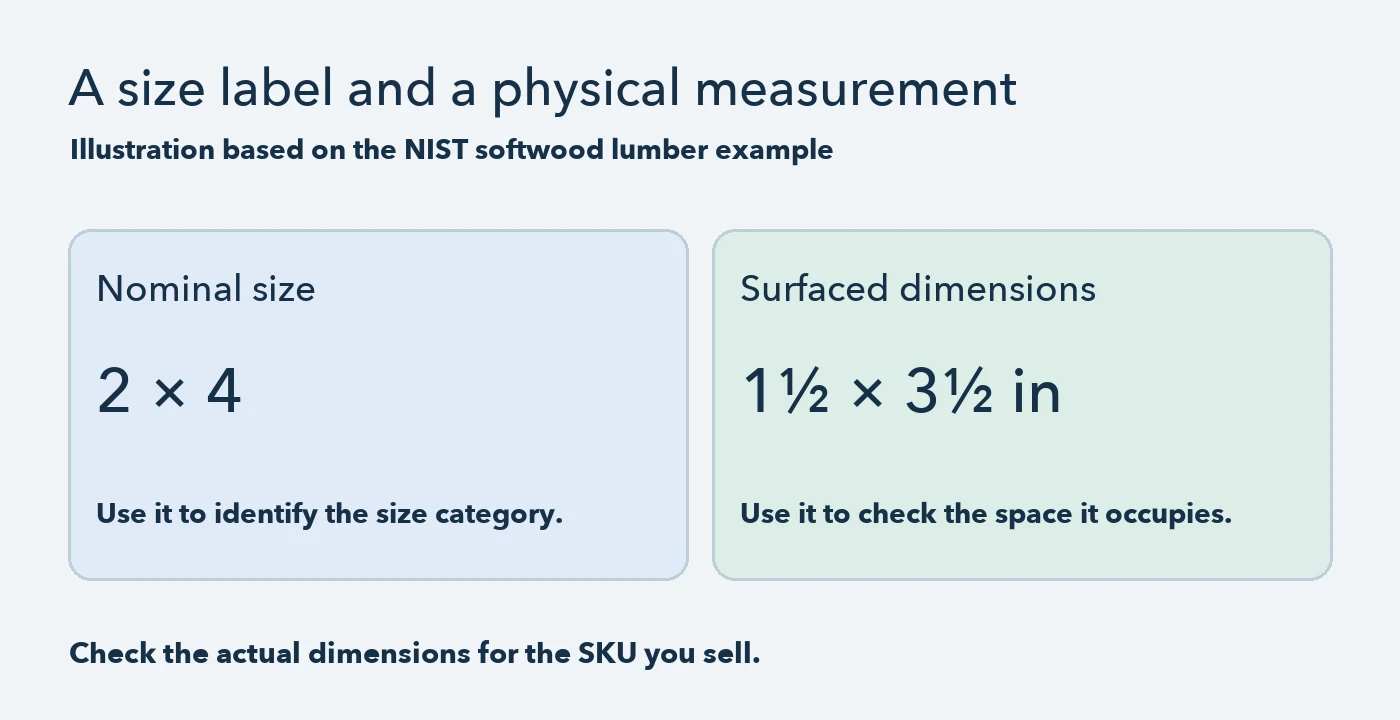
For example, NIST's Handbook 130 discussion of softwood lumber gives an example of a nominal 2 × 4 with surfaced dimensions of 1½ × 3½ inches. The example illustrates the difference between a name and a measurement. For a listing, use the finished dimensions documented for the specific board you sell.
Give the size label and the measurement separate jobs
Put the nominal size in the option selector or the heading if buyers use it to identify the product. Put actual dimensions beside the drawing or measurement arrows. Use explicit labels such as “Nominal size” and “Actual dimensions.” If the original image relies on tiny captions, move each label and its number into the same panel before export.
When a target market needs another unit, convert the documented actual measurement. Apply the rounding and tolerance approved for the listing. A convenient rounded number can cause a fit problem if the item has to pass through an opening or join another part. If the manufacturer gives only a size designation, ask for the actual measurements before adding a fit claim.
Check the downloaded image against the listing
Use PicTech.ai Image Translator to draft the target-language text. The editor guide explains how to compare the source and result and correct or move text. Review the size designation, the actual number and unit, and the part that each arrow measures.
Open the downloaded file at the width buyers will see. Confirm that the size designation matches the selected SKU and that the full actual dimension is still readable. If the specification also gives a tolerance, keep it with the measurement shoppers need to make the fit decision.